Assateague Island, Maryland: A Beach Day Around Wildlife and Weather
Plan a Maryland-district Assateague visit that distinguishes national-seashore access from other management areas, checks current conditions and keeps wild horses genuinely wild. This independent visitor guide was reviewed on October 18, 2026. It offers an adaptable planning sequence, not a reservation or a report of today's conditions. Check the linked official source before travel and follow on-site closures and staff directions. A photograph or an inviting forecast cannot establish that ocean entry is appropriate.
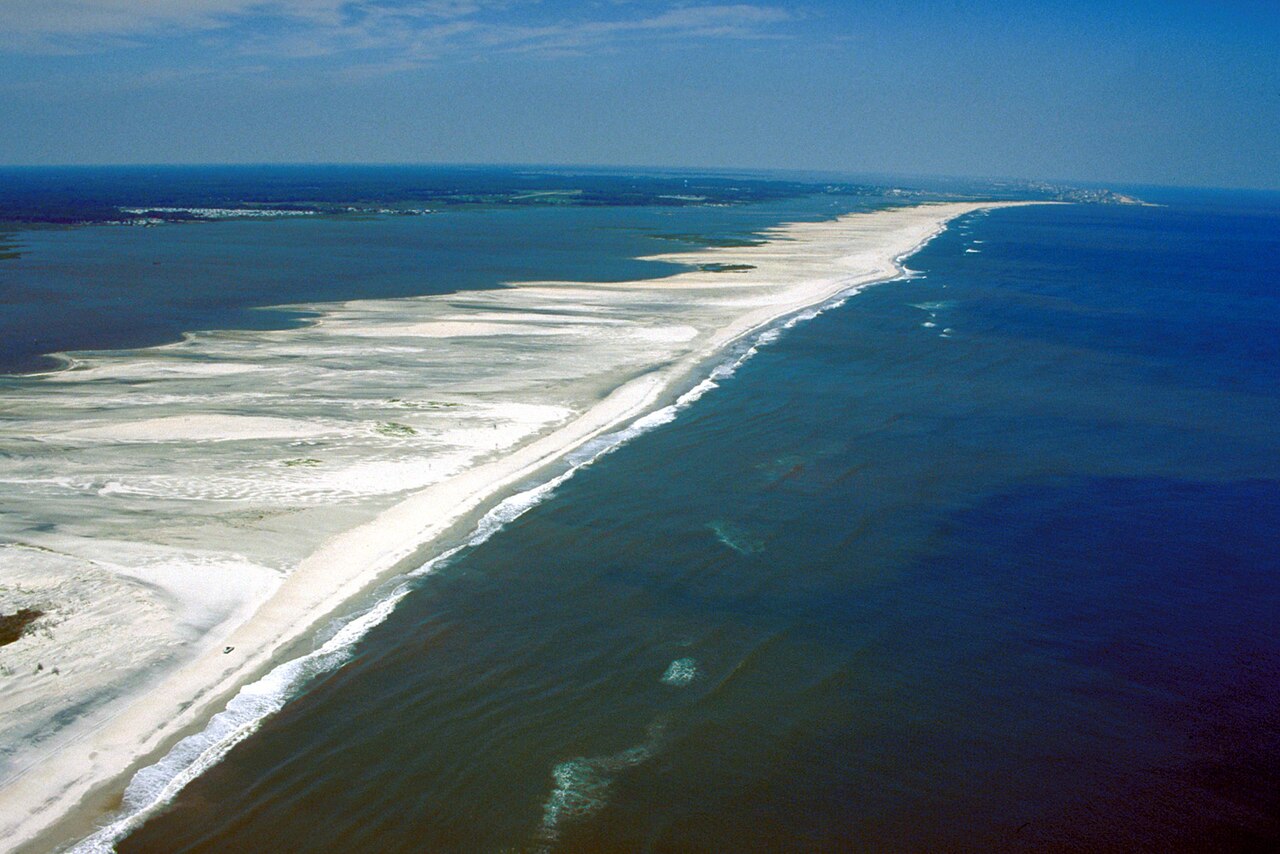
Photo: Susanne Bledsoe, U.S. Army Corps of Engineers · Public domain. Reference photograph: Assateague Island aerial view.jpg. It does not establish current access, weather, operations or a future event. Display may crop the original.

Choose the Maryland management area
Assateague spans Maryland and Virginia, and NPS explains that management areas differ, including Maryland's state park. This guide concerns a Maryland-district national-seashore day. Save the exact access and relevant official page rather than assuming every Assateague sign leads to identical fees, facilities and rules. Keep the destination clear when sharing maps.
Read current barrier-island conditions
Use NPS current-condition, weather and tide links before driving. A barrier-island beach can change, and an old photograph is not an access report. Check the actual area's opening and any resource-related closure. Keep a permitted alternative rather than expecting to move freely wherever the coastline looks attractive.
Plan legal arrival and the final walk
Confirm the current entry and parking arrangements for your selected area and date. Allow time for the route from the vehicle or other arrival point to the beach. Ask about personal access needs using the actual facilities and terrain. A general park accessibility statement does not answer every detail of your own journey.
Give horses space
NPS prohibits approaching within 40 feet of the horses, touching or feeding them, and warns that the minimum may still be too close in some circumstances. Use distance and a suitable camera view rather than moving toward an animal. If a horse approaches, follow current park guidance and keep food controlled instead of treating the encounter as a photo invitation.
Do not make sightings a guarantee
Wildlife moves independently and need not appear on your schedule. Make the shoreline, a modest walk and observation the main visit, with any sighting a possibility. Do not drive distractedly, block a road or disturb an animal to complete an itinerary. A respectful trip can be successful without a close horse photograph.
Pack for the real outdoor period
Read NPS safety information for sun, heat, insects and coastal conditions. Carry permitted necessities and a way to secure food and remove waste. Keep the load manageable and do not rely on an unverified concession. A self-contained setup should support the planned visit rather than encourage a longer or more remote outing than the group can manage.
Treat water activity separately
Check current ocean information and any actual lifeguard coverage for your selected date and location. A beach being open does not establish suitable swimming. Follow signs and staff and keep a land-based alternative. Avoid assuming that a different district's services or rules apply to the part of the island you are using.
Finish with a careful return
Choose a turnaround for any walk and leave time for the route back. Before driving, gather belongings and food packaging and watch for wildlife under the current park instructions. Keep the next road-trip stop optional if fatigue or weather changes. The full visit includes leaving the island responsibly rather than only reaching the sand.
A worked plan you can adapt
A family chooses a Maryland national-seashore access and saves that exact management area's information. Their main goal is beach time and a short observation walk; horse sightings are optional. They pack food securely, explain the required distance to children and agree that no one approaches an animal for a photograph. Before water activity, they check the day's information and actual coverage rather than assuming every part of the island has the same services. The return plan leaves time to pack and drive attentively. This invented example does not guarantee wildlife, parking or safe water. It shows how a specific management area and a respectful wildlife plan can prevent the most misleading assumptions.
Your working checklist
Checkmarks stay in this browser when storage is available. They do not submit information or complete a purchase.
Put it into practice
- Save the exact Maryland-district national-seashore access and distinguish it from the state park or Virginia arrangements.
- Check NPS current conditions, weather, tides and any local closure before choosing the day's activity.
- Verify entry, parking and the final walking route for the actual area and any essential access needs.
- Pack permitted necessities with controlled food storage and a way to remove all waste.
- Observe horses from the required distance or farther as circumstances require, never feeding, touching or approaching for an image.
- Keep wildlife sightings and water activity conditional, following current staff and posted directions.
- Return with the whole group and setup, staying attentive to wildlife and leaving enough energy for the onward drive.
Before you finish
- The access point for Assateague Island agrees with the saved map and your transport destination.
- Access, current alerts, local rules and any required reservation have been rechecked.
- The day's activity fits current conditions and the group's needs, with no promise of safe swimming.
- Everyone knows the return plan and all belongings and waste have been accounted for.
Common questions
Are all parts of Assateague managed the same way?
No. NPS describes Maryland and Virginia arrangements and a separate Maryland state-park area. Use the exact destination's current information.
Can I approach a horse for a photograph?
No. NPS prohibits approaching within 40 feet, touching or feeding, and says circumstances may require more distance. Keep the animal's space rather than seeking a close image.
Will we definitely see horses?
No wildlife sighting should be guaranteed. Build a worthwhile beach and observation visit without requiring an animal to appear.
Does an open beach guarantee guarded swimming?
No. Check current coverage and ocean information for your actual area and date and follow on-site directions.