Waikiki Beach, Oahu: Choose a Beach Section and Plan Your Day
Choose an actual Waikiki beach section on Oahu, match it to current ocean information and plan a manageable urban beach visit with a clear return route. This independent visitor guide was reviewed on October 18, 2026. It offers an adaptable planning sequence, not a reservation or a report of today's conditions. Check the linked official source before travel and follow on-site closures and staff directions. A photograph or an inviting forecast cannot establish that ocean entry is appropriate.
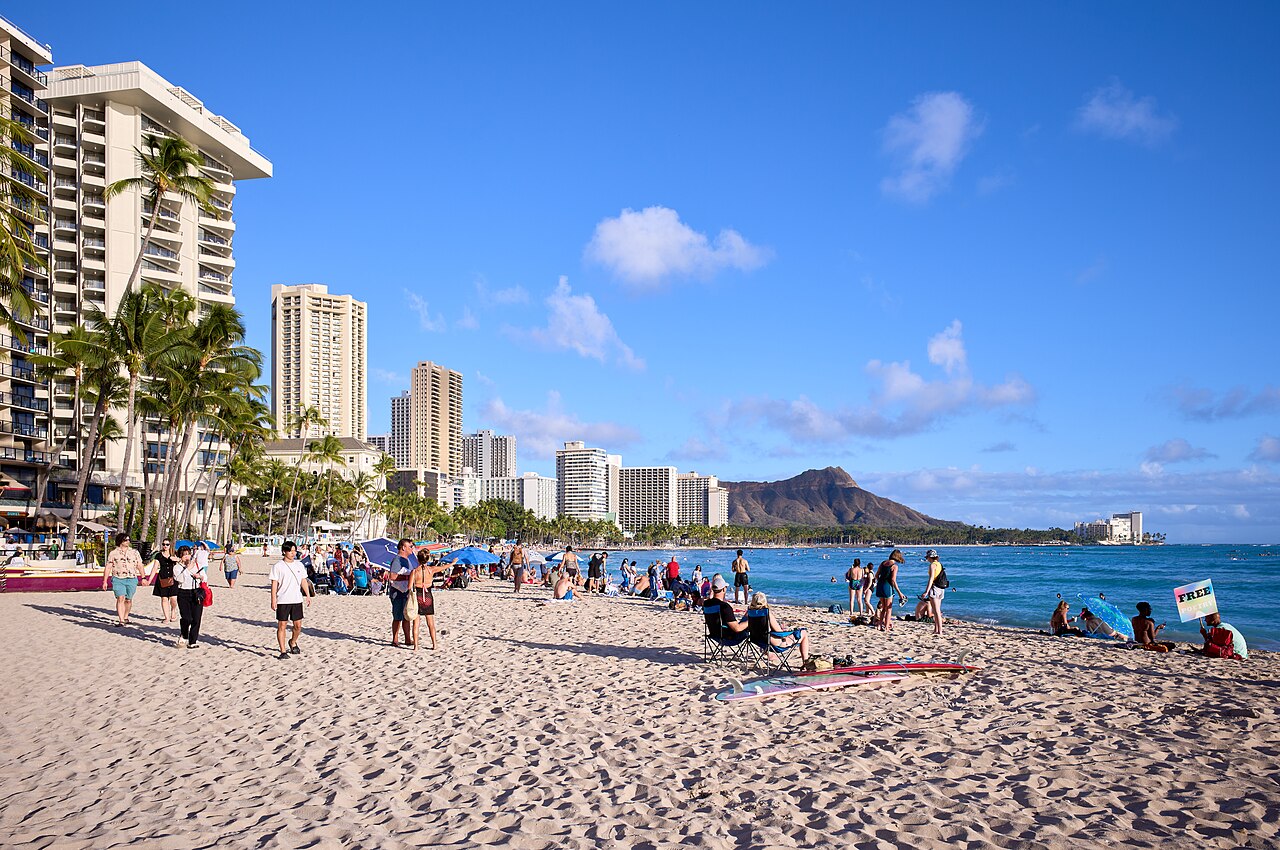
Photo: Frank Schulenburg · CC BY-SA 4.0. Reference photograph: Waikiki Beach (2024)-L1004709.jpg. It does not establish current access, weather, operations or a future event. Display may crop the original.
-L1004709.jpg)
Choose a section instead of a broad label
Waikiki is not one tiny meeting point. Use a current official map or the state ocean-safety beach listing to identify the section you intend, such as the listed Waikiki-Kuhio area. Share the precise access and meeting point. A hotel name or a broad waterfront photograph can leave companions on different parts of the shore.
Check current local ocean information
Hawaii Ocean Safety links named beaches with current conditions and facilities information. Check the relevant location before travel and follow on-site lifeguard and posted directions. A protected-looking area, a famous destination or other people in the water does not establish suitability for your group. Make a land-based visit an acceptable outcome.
Map the complete urban approach
If staying nearby, check the actual public route from accommodation to the chosen access. If traveling across Oahu, use current transport or legal parking information rather than assuming the beachfront offers an easy space. Consider the load you can carry through busy shared areas. A short map distance is not a promise of immediate arrival.
Separate equipment and instruction
If renting equipment or booking a lesson, verify the provider, meeting point, activity requirements and change terms. Do not assume that a rental includes instruction or that an activity is appropriate merely because it is widely advertised. Keep the public beach visit and the commercial booking as distinct decisions, especially when conditions can affect the activity.
Plan a compact beach base
Choose a setup that fits the available permitted area without blocking public movement. Bring only necessary belongings and keep valuables limited and supervised through a practical arrangement. A crowded urban beach requires the same attention to possessions as another public place. Do not assume a hotel service extends to everyone on the adjoining sand.
Use a realistic rest and food plan
Decide whether to carry permitted food, return to accommodation or buy a meal, checking the actual provider if timing matters. Leave room for heat, fatigue and a change of clothes. A tightly booked sequence of lesson, meal and tour can make a simple beach visit unnecessarily stressful. Keep at least one extra optional.
Respect the place beyond the photograph
Use public access appropriately, follow current rules and avoid disturbing wildlife or cultural and community spaces. Ask permission before photographing identifiable people in a way that intrudes on their visit. Keep the destination accurately named when sharing images; a generic tropical beach does not describe this specific part of Oahu.
Keep the later return clear
If you remain for evening light, check how you will get back and whether a transport service or parking arrangement changes. Carry what you need for the walk without overloading the outing. Collect the entire base and waste before departure. A meal afterward should fit the group's energy rather than become an obligation created by an attractive itinerary.
A worked plan you can adapt
Two visitors staying in Honolulu want beach time and possibly a lesson. They first choose an exact Waikiki section and save the public walking route, instead of using a hotel photograph as a meeting instruction. They check the current ocean information and then evaluate a lesson as a separate purchase. Their bag is light enough for the urban approach, and the food plan can move if they need rest. If conditions make the activity unsuitable, they still have a shoreline visit and a relaxed meal. The invented example does not guarantee equipment, calm water, hotel services or a particular view; it shows how a specific location and flexible priorities make a well-known destination easier to navigate.
Your working checklist
Checkmarks stay in this browser when storage is available. They do not submit information or complete a purchase.
Put it into practice
- Select an exact Waikiki beach section and access point using current official location information.
- Check the named beach's ocean conditions and any local notices, keeping a shore-based alternative in the plan.
- Map the complete walking, transit or legal parking approach and choose a manageable amount of belongings.
- Verify any lesson or equipment provider separately, including requirements, meeting place and change terms.
- Set up without blocking public movement and maintain a practical arrangement for valuables and group contacts.
- Follow lifeguard and posted directions, taking food or rest breaks before a tight schedule becomes the main activity.
- Recheck the evening return and leave with the entire base and all waste accounted for.
Before you finish
- The access point for Waikiki Beach agrees with the saved map and your transport destination.
- Access, current alerts, local rules and any required reservation have been rechecked.
- The day's activity fits current conditions and the group's needs, with no promise of safe swimming.
- Everyone knows the return plan and all belongings and waste have been accounted for.
Common questions
Can I tell friends to meet simply at Waikiki Beach?
Choose a specific section and recognizable access. The broad name can leave people in different places along the waterfront.
Does a lesson booking guarantee the water activity will happen?
No. Read the provider's requirements and change terms, and follow current conditions and official instructions. Keep the beach visit and commercial booking distinct.
Do nearby hotels provide services to all beach visitors?
Do not assume so. Confirm any service with the provider and use public access respectfully rather than treating an adjoining hotel as part of your admission.
Is a famous or busy beach automatically suitable for swimming?
No. Check the exact location's current ocean information and follow on-site directions. A worthwhile land-based plan avoids depending on water entry.