Clearwater Beach, Florida: Arrival, Beach Time and a Sunset Plan
Build a Clearwater Beach visit around one legal arrival option, a defined Pier 60-area meeting point and current Gulf-coast conditions rather than a guaranteed parking or sunset promise. This independent visitor guide was reviewed on October 18, 2026. It offers an adaptable planning sequence, not a reservation or a report of today's conditions. Check the linked official source before travel and follow on-site closures and staff directions. A photograph or an inviting forecast cannot establish that ocean entry is appropriate.
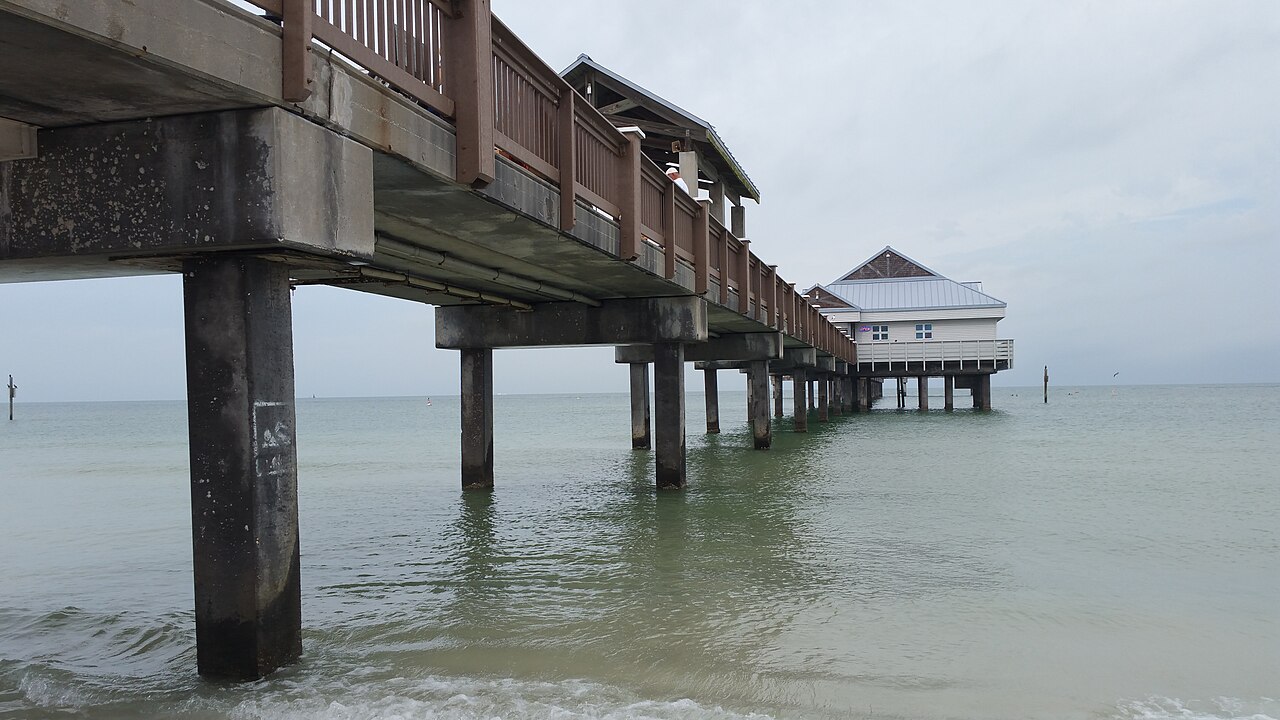
Photo: Jana Taylor · CC BY-SA 3.0. Reference photograph: Pier 60 at Clearwater, FL 2016 - panoramio.jpg. It does not establish current access, weather, operations or a future event. Display may crop the original.

Choose a precise Clearwater base
Clearwater Beach and the Pier 60 area provide a recognizable starting point, but choose the exact place your group will meet. Use the city's official park information rather than a generic Gulf beach photograph. Mark where you intend to reach the sand and how companions arriving separately can find you without blocking a busy entrance.
Plan parking through current city information
Clearwater's official beach-parking page lists legal options and a current map. Compare the route, payment method and time restrictions for the actual lot or garage. Do not rely on a historic price or assume the closest lot has space. Keep a legal fallback and avoid turning an unavailable first choice into repeated unplanned circling.
Consider the full approach
Allow time for road traffic, parking, the walk and setting up your base. A distance estimate from the mainland does not include every arrival step. If using another transport option, check its current route and return service with the official provider. Choose a load you can manage from the place you actually arrive.
Separate the pier from other activities
Decide whether your priority is sand time, a pier-area walk or an independently arranged activity. Verify any event, rental or tour through its own current provider and terms. A public beach visit does not include every advertised attraction. Keep one main extra and leave the rest optional so a simple afternoon does not become a series of deadlines.
Check beach and weather conditions
Review current local coastal notices, weather and water information, then follow staff and posted flags or closures. A clear sky does not prove that the surf is suitable. Keep a land-based plan and do not use other people entering the water as your sole assessment. Conditions can change while you are already on the sand.
Make food and comfort practical
Decide whether to carry permitted food or buy a meal and keep water and appropriate protection available. Check any service you depend on rather than assuming it operates continuously. Identify a suitable rest or restroom option through current city information. A compact base is easier to move if wind, heat or crowds change the plan.
Treat sunset as an optional finish
Check the actual date's sunset and weather if the light matters, while recognizing that cloud and access can change the experience. Keep enough time for packing and the route back after daylight fades. Do not promise a particular photograph or add an inflexible dinner immediately after a crowded departure.
Leave with the return already decided
Review parking conditions or the final relevant transport service before extending the visit. Give everyone the meeting point and contact plan if the group splits. Account for belongings, food packaging and waste. A good Clearwater day includes an orderly return, not only an appealing final image by the water.
A worked plan you can adapt
Three friends plan an afternoon at Clearwater Beach and hope to stay for evening light. They choose one meeting point, compare current city parking options and save a fallback. Their main activity is sand time with a short pier-area walk; a tour remains a separate possibility rather than an assumed part of admission. They check coastal conditions and agree that the visit works without swimming. Before extending into the evening, they review parking or transport conditions and leave room to pack without rushing. The example contains no invented parking rate, promised sunset color or guaranteed attraction. It demonstrates how a popular beach can still be planned around a few clear decisions.
Your working checklist
Checkmarks stay in this browser when storage is available. They do not submit information or complete a purchase.
Put it into practice
- Choose the exact Clearwater Beach base and meeting point using the city's Pier 60 and beach information.
- Review the current official parking map or transport options and save a legal fallback.
- Allow for the full approach, payment and walk, carrying only what the group can manage from that arrival point.
- Verify any separate activity or event and keep a second extra optional rather than assumed.
- Check current coastal and weather information and follow on-site staff, flags and closures.
- Plan food, water and rest practically, treating sunset as a flexible possibility rather than a guarantee.
- Recheck the return arrangement before staying later and leave with all belongings and waste accounted for.
Before you finish
- The access point for Clearwater Beach agrees with the saved map and your transport destination.
- Access, current alerts, local rules and any required reservation have been rechecked.
- The day's activity fits current conditions and the group's needs, with no promise of safe swimming.
- Everyone knows the return plan and all belongings and waste have been accounted for.
Common questions
Can I assume the Pier 60 lot will have space?
No. Use current city parking information and a legal fallback. A listed lot is not a reservation or availability guarantee.
Are all pier-area activities included in a beach visit?
No. Check each attraction, event or rental separately with its provider, including current availability and terms.
Does sunny weather mean the water is suitable?
No. Check current coastal information and follow flags, closures and staff directions. Keep a worthwhile land-based option.
Should I make sunset the only goal?
Treat it as optional because light and weather can vary. Keep the packing and return route manageable even if the expected view does not appear.