Cannon Beach, Oregon: Haystack Rock and a Tide-Aware Visit
Plan a Cannon Beach visit around the real Haystack Rock, current tides and respectful observation, with enough flexibility to enjoy the coast without forcing access to tide pools. This independent visitor guide was reviewed on October 18, 2026. It offers an adaptable planning sequence, not a reservation or a report of today's conditions. Check the linked official source before travel and follow on-site closures and staff directions. A photograph or an inviting forecast cannot establish that ocean entry is appropriate.
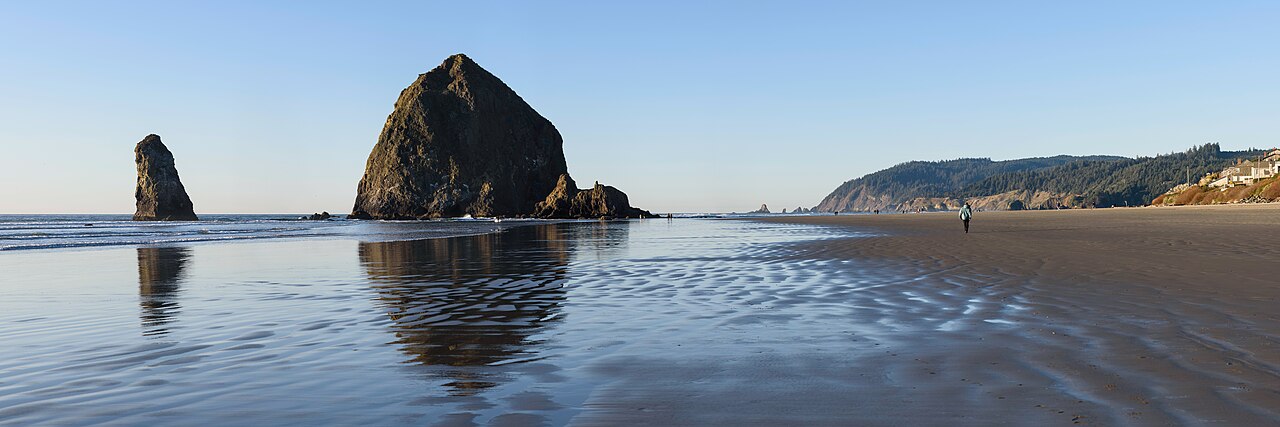
Photo: King of Hearts · CC BY-SA 4.0. Reference photograph: Cannon Beach October 2019 panorama 2.jpg. It does not establish current access, weather, operations or a future event. Display may crop the original.

Confirm which Haystack Rock you mean
Use Cannon Beach, Oregon, and the local official destination information when planning. The recognizable rock is a specific coastal feature, not a generic name for every sea stack in a photograph. Share the intended beach access and meeting point. This is especially important when a group is using separate cars or searching from image results.
Make tide information part of the plan
Check a suitable current tide source and the local Haystack Rock Awareness Program guidance for the date. A low-tide label alone does not establish a safe route or accessible pool. Consider the return as water changes and follow staff directions. If conditions do not support your intended exploration, choose observation from a suitable public area instead.
Treat the rock as habitat
The city's information and stewardship program explain the ecological importance of Haystack Rock. Observe wildlife without approaching protected nesting or intertidal areas contrary to signs. Do not climb, remove animals or rearrange a pool for a photograph. Your goal is to see the place while leaving it available for the organisms that live there.
Choose one legal arrival point
Use current city or official park information to identify parking and the beach approach. Allow time for the walk to the viewing area and do not promise that a nearby space will be available. If the first option is full, use the legal fallback rather than parking across an access or creating your own route through protected ground.
Match clothing to a coastal outing
Think about wind, precipitation and changing temperature as well as the inland forecast. Carry practical layers and shoes appropriate to the approved route without overloading the day bag. Keep essentials protected and leave unnecessary valuables elsewhere. A bright summer photograph does not describe the conditions on your chosen day.
Use a modest viewing sequence
Begin with a broad view, then decide whether a closer permitted observation area is suitable. Keep the group's movement together and choose a turnaround before the route becomes uncomfortable. Do not let the desire for one image override the tide, surf or posted boundary. A wider view can still be a successful main activity.
Make stewardship interpretation optional
Check whether the local awareness program has a current public presence or activity relevant to your date. Treat that as a separate confirmed opportunity, not a permanent promise. If staff or volunteers are present, use their guidance respectfully. Avoid relying on a calendar from a prior season or expecting an unscheduled private lesson.
Plan a warm and unhurried finish
Keep a meal or indoor rest option flexible and verify its own availability if important. Allow enough time to return to the access with all belongings and waste. Do not add a second distant coastal stop just because the first visit was shorter than expected. A simple plan leaves room to enjoy the setting rather than race between photographs.
A worked plan you can adapt
A pair wants to see Haystack Rock and learn about the intertidal environment. They check current tide and stewardship information, then choose an arrival window that leaves time for parking and the walk. Their main goal is observation, with a closer permitted area optional according to conditions. They carry layers and a light bag, and they agree that a wider view is enough if the surf or changing water makes the intended route unsuitable. A meal afterward stays flexible. The plan deliberately avoids a promise of puffins, exposed pools, staff presence or parking. Its value is that the visit remains worthwhile while respecting the actual coast rather than forcing a particular image from an itinerary.
Your working checklist
Checkmarks stay in this browser when storage is available. They do not submit information or complete a purchase.
Put it into practice
- Save Cannon Beach, Oregon, the exact Haystack Rock destination and a specific group access point.
- Check current tides, weather and local stewardship guidance before choosing the kind of shoreline observation you intend.
- Identify legal parking and a fallback, allowing time for the walk rather than assuming the nearest space is available.
- Pack practical coastal layers and a manageable load, leaving unnecessary valuables out of the outing.
- Observe from permitted areas and follow signs or stewardship staff, keeping wildlife and intertidal habitat undisturbed.
- Turn around or remain farther back if tide, surf or the route makes closer access unsuitable.
- Return with all belongings and waste and use a flexible warm-rest or meal plan instead of rushing to another coast stop.
Before you finish
- The access point for Cannon Beach agrees with the saved map and your transport destination.
- Access, current alerts, local rules and any required reservation have been rechecked.
- The day's activity fits current conditions and the group's needs, with no promise of safe swimming.
- Everyone knows the return plan and all belongings and waste have been accounted for.
Common questions
Does low tide guarantee access to every tide pool?
No. Current surf, route conditions, protected areas and the changing tide still matter. Follow local guidance and keep a suitable land-based alternative.
Can we climb or rearrange things for a photograph?
Do not disturb habitat or cross posted boundaries. Observe wildlife and pools without removing organisms or changing their surroundings.
Will the awareness program always be on the beach?
Check its current schedule or presence for your date. Do not turn an old seasonal calendar into a guarantee of staff or an activity.
How do I avoid confusing the destination?
Use Cannon Beach, Oregon, the exact local feature and an identified access. A generic sea-stack photograph or broad coast search is not enough.